
Last Updated on February 6, 2026 by Damien Hurwitz
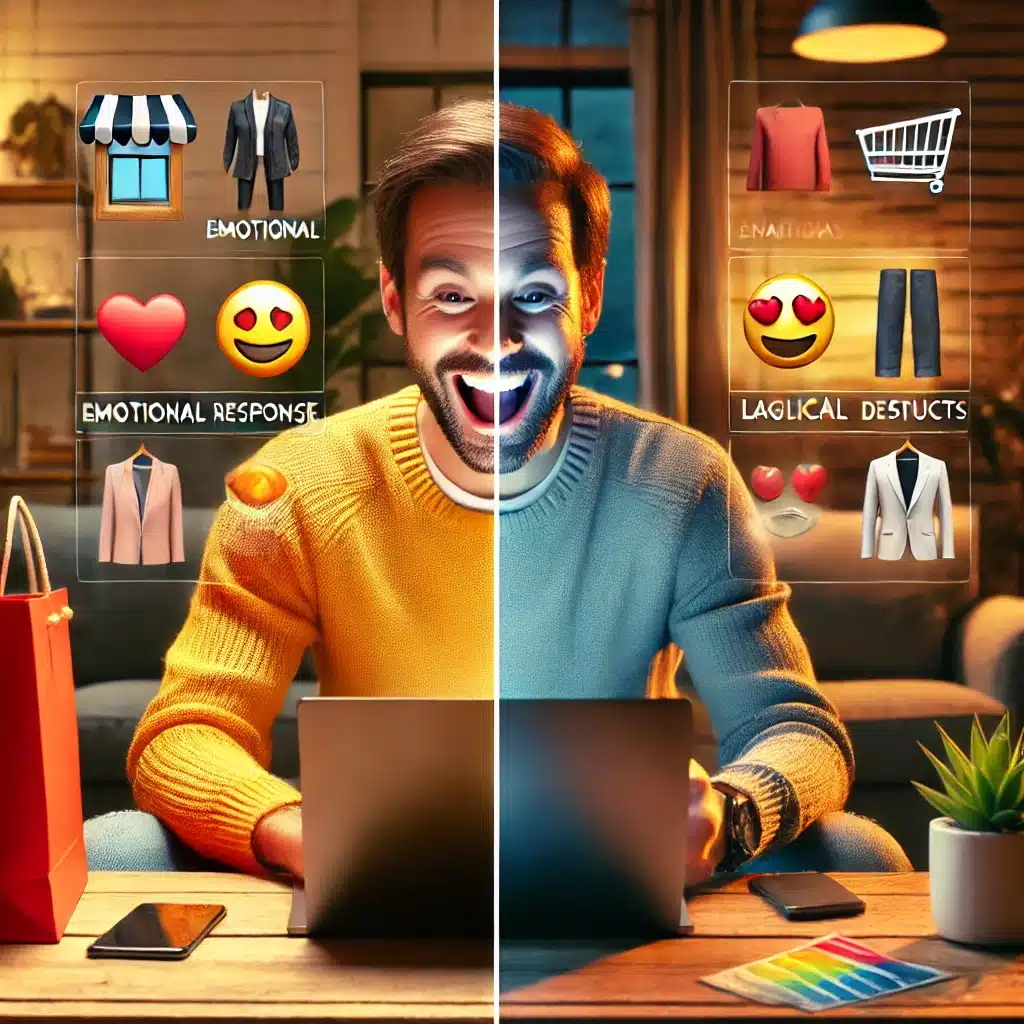
People don’t always buy what makes the most sense. They buy what feels right. Studies show that up to 95% of purchasing decisions are subconscious, driven by emotions before logic even gets a chance to weigh in. That’s why businesses need to understand both sides—appealing to emotions while backing it up with logic.
Why Emotion Drives Most Online Purchases
Think about the last time you bought something impulsively. Maybe it was a limited-time deal, a beautifully designed product, or a brand that just “felt” right. That’s emotion at work. It taps into desire, aspiration, and trust. When brands master emotional marketing, they create loyal customers who buy based on how a product or service makes them feel.
Brands like Apple and Nike are great examples. They don’t just sell products; they sell experiences, lifestyles, and identities. You’re not just buying a phone; you’re buying innovation. You’re not just buying sneakers; you’re investing in peak performance.
Another powerful example is luxury brands like Rolex or Gucci. Consumers aren’t just paying for the product; they’re paying for status, exclusivity, and the feeling of belonging to an elite group. These purchases are rarely about the logical assessment of quality alone. Instead, they’re emotional investments that make the buyer feel a certain way—sophisticated, successful, or unique.
When Logic Wins in Online Buying
Emotion may be the first driver, but logic still plays a role—especially for high-ticket purchases or B2B decisions. Customers look at specifications, reviews, and price comparisons before hitting the “Buy Now” button. If something doesn’t add up, they’ll hesitate.
For example, a company shopping for enterprise software won’t make a decision based on brand storytelling alone. They’ll want hard data, case studies, and ROI projections. That’s why successful businesses use a blend of both: leading with emotion and closing with logic.
Even in consumer purchases, logic kicks in when evaluating durability, warranty, or long-term value. A person may be emotionally drawn to a sleek electric car, but they will still examine battery life, maintenance costs, and resale value before finalizing their purchase.
Strategic Approaches: How to Balance Emotion and Logic
- Use storytelling: Case studies, testimonials, and narratives trigger emotions while offering factual proof of success.
- Leverage urgency: Scarcity (“Only 3 left!”) and time-sensitive offers create an emotional pull.
- Showcase social proof: Reviews and ratings provide logical reassurance.
- Break down costs: Subscription models and flexible payments help justify spending.
- Highlight key benefits over features: Don’t just list specs—explain why they matter.
- Use comparison charts: Help customers make logical decisions by directly comparing your product to competitors.
- Appeal to different buyer personas: Some shoppers are logic-driven while others are emotion-driven. Address both perspectives in your messaging.
Effective Mediums for Emotion and Logic in Online Selling
Social Media: The Emotional Hook
Platforms like Instagram and TikTok thrive on emotional connections. Stunning visuals, influencer endorsements, and engaging video content drive impulse purchases. Brands use storytelling to establish relatability and trust.
Additionally, short-form videos and live streams create real-time engagement that builds emotional momentum. Customers see others reacting positively to a product, which strengthens their own emotional inclination to buy.
Landing Pages: The Logical Reassurance
A well-structured landing page should provide both emotional appeal and logical justification. Headlines and images should grab attention emotionally, while bullet points and testimonials offer factual support.
To make landing pages even more effective, include interactive elements like ROI calculators, side-by-side product comparisons, or downloadable whitepapers for deeper analysis.
Email Marketing: Nurturing Both Sides
Emails can create emotional urgency through personalized offers while delivering logical arguments via data-driven insights.
For instance, an abandoned cart email may say, “This item is selling fast! Get it before it’s gone.” That’s the emotional hook. The next line might say, “Plus, with free returns and a 2-year warranty, there’s no risk!” That’s logic closing the deal.
Retargeting Ads: Reigniting Emotional and Logical Interest
People often need multiple touchpoints before making a purchase. Retargeting reminds them why they were interested in the first place (emotion) while reinforcing why it’s a smart choice (logic).
Ad copy can play into both aspects: “You loved this jacket! And now, it’s 20% off—plus, free shipping today only.” This approach appeals to emotions (desire and urgency) while justifying it with a logical incentive (discount and free shipping).
Final Thoughts
The best marketing doesn’t choose between emotion and logic—it blends both. By understanding how your audience makes decisions, you can craft messages that connect emotionally while standing up to logical scrutiny.
If you’d like help growing your business via emotion vs. logic in online buying, contact us today for a free strategy consultation.