
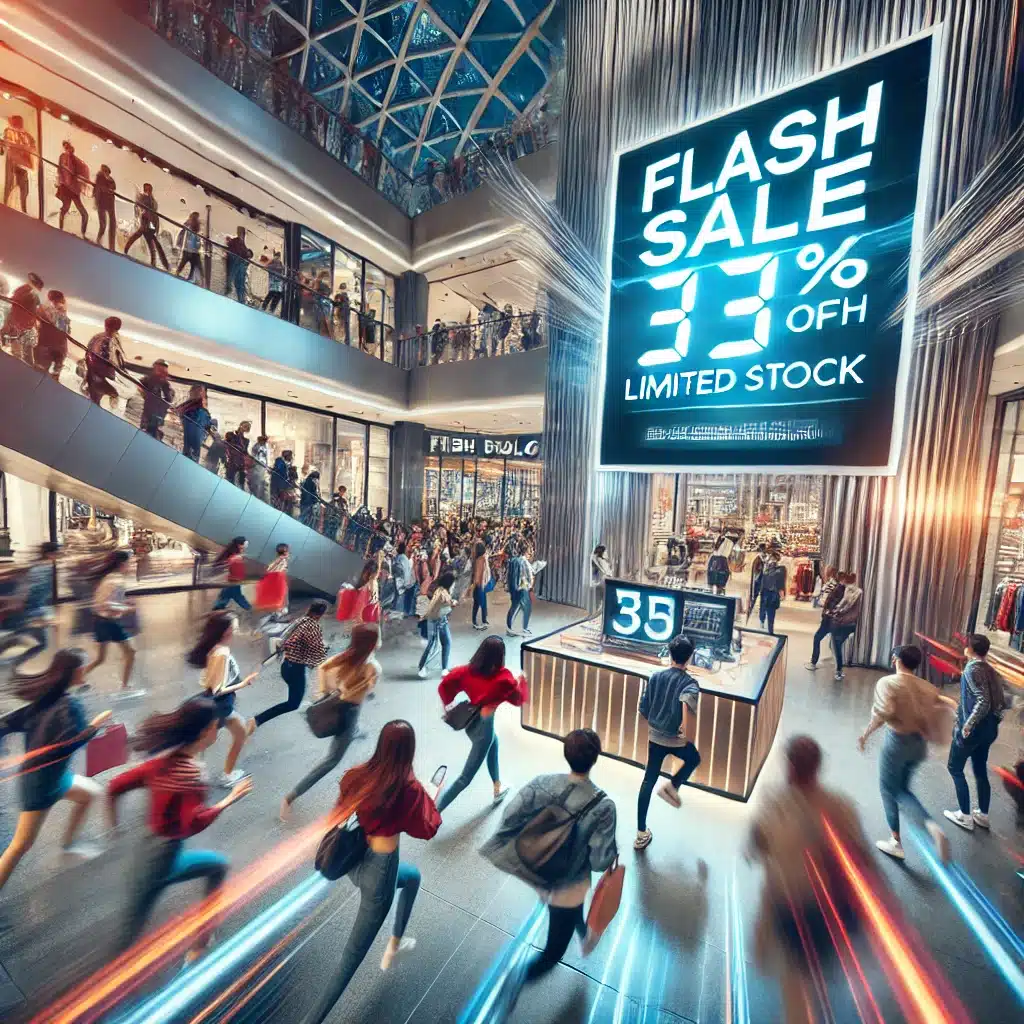
Ever wondered why some flash sales and product drops sell out in minutes while others fizzle out? It’s not just luck—it’s psychology. Creating a real sense of urgency can make or break a limited-time sale. But what actually works, and what just annoys customers?
Scarcity: The Classic Trigger for Flash Sales and Product Drops
Nothing makes people act faster than the fear of missing out. Studies on consumer behavior show that when products are labeled as ‘limited stock’ or ‘only 5 left,’ shoppers feel an immediate need to buy. Amazon’s ‘Only X left in stock’ alert is a perfect example of how well this works.
Psychologists refer to this as the scarcity principle—when something is perceived as rare or about to disappear, people value it more. This tactic works especially well for high-demand items, like sneakers, gaming consoles, and luxury handbags. Retailers can further enhance this effect by showing real-time stock updates or displaying messages like ’20 people are looking at this right now!’
Time Pressure and Countdown Timers
Ever felt your pulse race when you see a countdown timer? That’s no accident. Research suggests that adding a visual timer increases conversion rates because it makes the deadline feel real. However, fake timers that reset when the page refreshes? Those destroy trust.
Companies like Booking.com and Expedia use countdown timers effectively by showing messages like ‘Only 3 rooms left at this price! Offer expires in 2 hours!’ This nudges users to book their stay before the deal disappears. When implemented authentically, this strategy pushes shoppers to act without feeling manipulated.
Exclusivity and VIP Access
People love feeling special. Brands like Nike and Supreme use exclusive drops to reward loyal customers. If shoppers believe they’re getting early access to something others won’t, they’re more likely to make a snap decision.
Retailers build exclusivity through invite-only sales, early access memberships, or special perks for loyalty program members. Apple, for instance, creates hype by offering limited pre-orders before a general product release, making customers feel like insiders.
Social Proof and the Power of the Crowd
Seeing others buy something makes us want it more. Flash sales thrive on social proof—whether it’s through live purchase updates (‘John just bought this!’) or showing how many people are viewing an item right now.
This tactic works because of a psychological phenomenon called herd behavior. When people see others making a purchase, they assume it’s a good decision and follow suit. Social proof is particularly powerful on platforms like Instagram, where influencers show off their latest product purchases, fueling demand and urgency.
Psychological Pricing in Flash Sales and Product Drops
Beyond urgency, pricing plays a key role in flash sales and product drops. Strategies like anchoring, where the original price is displayed alongside the discounted price, make deals look more attractive. A $100 item marked down to $49.99 seems like an incredible bargain, even if the original price was artificially inflated.
Similarly, odd pricing—such as ending prices in .99 or .95—makes discounts feel larger. Psychological research suggests that people perceive these prices as significantly lower than rounded numbers. That’s why most retailers avoid whole numbers when setting sale prices.
Urgency in E-Commerce vs. Brick-and-Mortar Stores
Urgency works differently in online stores compared to physical retail locations. In e-commerce, tactics like cart expiration, fast shipping incentives, and pop-up scarcity alerts help drive conversions. On the other hand, in brick-and-mortar stores, visual merchandising, limited-time in-store promotions, and ‘while supplies last’ signs encourage immediate purchases.
Retailers like Best Buy and Walmart use in-store flash sales to draw crowds, sometimes offering doorbuster deals for only a few hours. The physical rush to grab a deal creates an adrenaline-fueled shopping experience that online stores try to replicate through ‘lightning deals’ and limited-time offers.
Final Thoughts
Urgency works when it’s real. If you’re running a flash sale or product drop, make sure your scarcity, timers, and exclusivity tactics are legitimate. Otherwise, customers will catch on—and they won’t come back.
If you’d like help growing your business, contact us today for a free strategy consultation.