
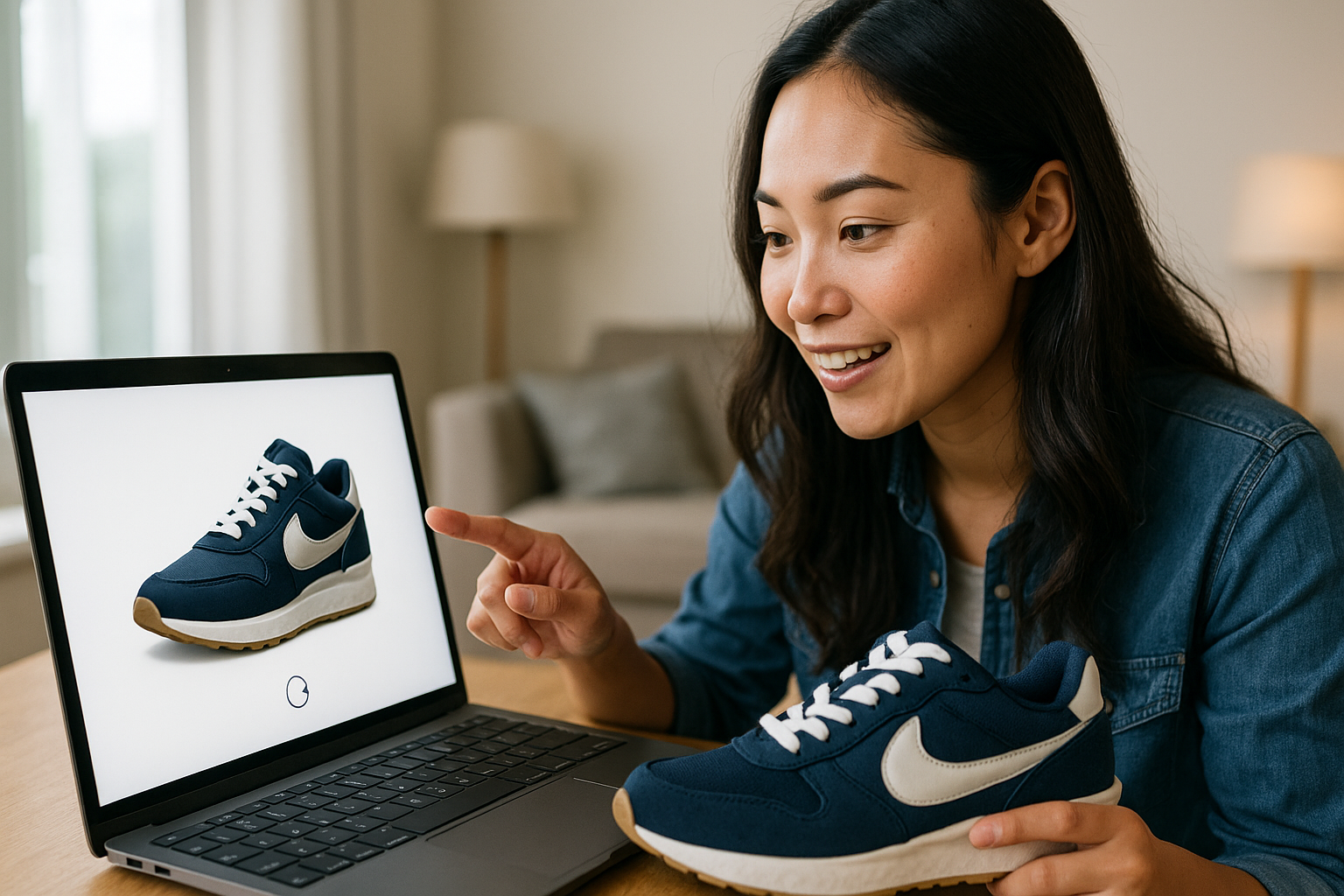
Imagine checking out a pair of shoes online and being able to spin them around like you’re holding them in your hand. No clunky zoom-in. No guessing at the shape. Just a clean, 3D view that shows you exactly what you’re getting. That’s where we’re headed—fast.
Google just dropped an AI-powered feature that turns plain product photos into interactive 3D models. The idea? Make online shopping feel more like browsing the shelves in real life. For anyone in eCommerce or digital marketing, this might be a quiet revolution worth paying close attention to.
The keyword here—literally and strategically—is AI-generated 3D product images. With shopping habits constantly evolving, this kind of technology feels less like a novelty and more like a necessity.
How AI-Generated 3D Product Images Work
Let’s break it down: Google’s system takes a few standard product photos and uses machine learning to recreate a 360° interactive image. No need for expensive 3D scanning setups or fancy photoshoots. As long as a product is shown from multiple angles, Google’s model can stitch together a lifelike, rotatable image. It’s not quite sci-fi—but it’s close.
According to Social Media Today, this new capability rolled out specifically for certain types of apparel—like sneakers—on mobile shopping listings. Why? Because people like to see what they’re buying, and clothing or shoes are notoriously hard to gauge from flat images.
This tech is already reducing friction in the shopping process. Customers are spending more time on pages with interactive images, which often means a higher likelihood they’ll hit that “buy now” button. It’s part of Google’s bigger push to personalize and enrich the online buying process in a way that feels human.
Why It Matters for Marketers
This isn’t just a gimmick. It’s a smart strategy play for any eCommerce brand.
When you add AI-generated 3D product images to your listings, you’re not just making things prettier. You’re giving customers more clarity. More clarity usually leads to more confidence. And more confidence? That leads to more conversions.
What’s more, this added visual context can cut down on product returns. If shoppers get a better sense of the item before they buy, they’re less likely to send it back. For brands, that’s a cost saver.
Marketers also benefit from better engagement metrics. More time spent on site. Lower bounce rates. Better scroll depth. These aren’t just vanity metrics—they’re real indicators of how your audience is interacting with your brand in a meaningful way.
“So many of the tactics we employee in ecommerce are in an effort to mimic the in-person shopping experience. Being able to see a product from all angles greatly enhances that experience. So inexpensive access to 3D product images will provide a huge boost in conversion rate and thus revenue to certain product verticals look footwear.”
— Robert Davis, CEO of Sandhill Digital
What This Means for the Future of Shopping
It’s not just about shoes and shirts. This kind of AI could eventually support everything from home decor to electronics. Think about furniture retailers who want to give shoppers the ability to rotate a lamp or couch before adding to cart. Or tech companies demoing gadgets from all sides. It’s all fair game.
And let’s not ignore the potential for social commerce. As platforms like Instagram and TikTok experiment with more integrated shopping features, this tech could add depth (literally) to shoppable posts.
Google isn’t alone here. Amazon, Shopify, and others are all exploring or implementing similar features. But Google’s angle—using AI to make this scalable—is what sets it apart. You don’t need deep pockets or a huge production team to participate. Even niche marketplaces could start offering this kind of functionality, opening the door for smaller brands to compete visually.
Getting Started with 3D Product Imagery
If you’re considering testing out AI-generated 3D product images, here’s what to think about:
- Audit your product imagery: Do you have at least a few images from different angles?
- Check platform compatibility: Google’s rollout is focused on mobile Shopping listings for now, but that will grow.
- Start with your top sellers: Test this feature on products with the most traffic first.
- Analyze impact: Watch how it affects engagement and conversions. Don’t assume—it’s all about the data.
And if you need support building a scalable, conversion-friendly creative strategy? Sandhill Digital’s services offer flexible solutions that plug right into your existing workflow.
Final Thoughts
AI-generated 3D product images aren’t just flashy—they’re useful. They bring your products closer to the customer, especially in a world where people expect to “feel” a product before buying it.
While we can’t say for sure how fast this will scale across industries, it’s probably smart to get familiar now. Test it. Learn what works. And stay ahead of what’s next.
Let your competitors play catch-up while you give your customers something fresh, interactive, and way more informative. Because shoppers aren’t slowing down. And your visuals shouldn’t either.
If you’d like help growing your business, contact us today for a free strategy consultation.